Table of Contents
Introduction
Did you know that over 537 million adults worldwide live with diabetes, yet many traditional festive foods remain off-limits to them? During Ramadan, when nutritious, energy-sustaining foods become essential, many diabetics struggle to find suitable alternatives to beloved traditional treats. The Sugar-Free Sellou Recipe transforms this iconic Moroccan delicacy into a diabetic-friendly option without sacrificing its rich, nutty flavor profile. This adaptation of the traditional almond-based confection provides sustained energy while maintaining blood glucose stabilit a perfect solution for diabetics observing Ramadan or anyone seeking healthier versions of cultural classics. Our sugar free sellou diabetics, Moroccan sellou healthy, almond sellou recipe preserves authentic flavors while eliminating refined sugars that can cause dangerous blood sugar spikes.
Ingredients List
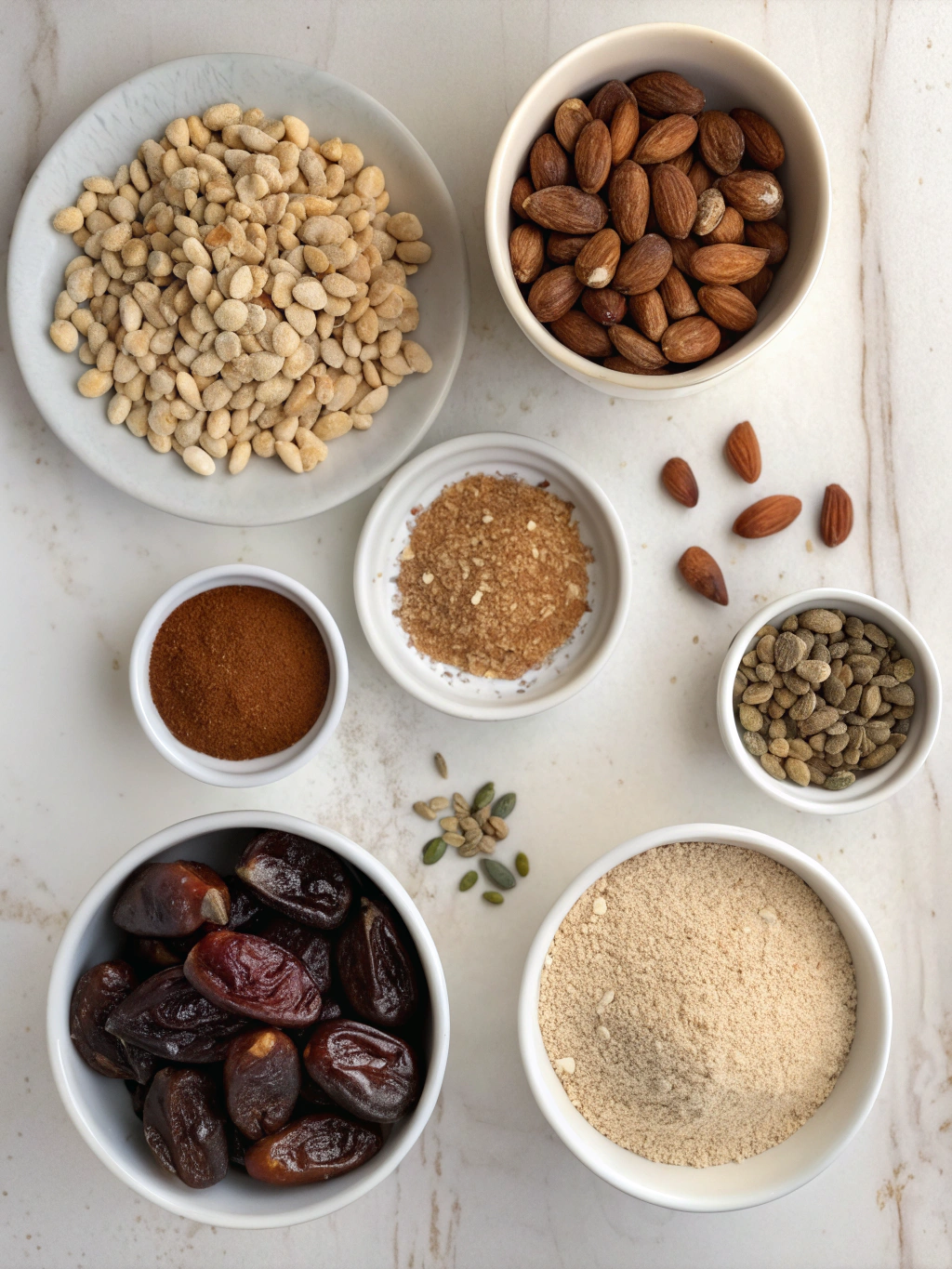
- 2 cups toasted almond flour (freshly ground offers superior flavor)
- 1 cup toasted sesame seeds
- ½ cup golden flaxseed, ground
- 1 tablespoon anise seeds, toasted and ground
- 2 teaspoons cinnamon
- 1 teaspoon ground fennel seeds
- ¼ teaspoon salt
- ¾ cup sugar-free sweetener (erythritol, monk fruit, or allulose)
- ½ cup melted ghee or clarified butter (substitute with coconut oil for dairy-free version)
- ¼ cup sugar-free honey alternative or yacon syrup
- 2 tablespoons toasted unsweetened coconut (optional)
- ½ cup raw almonds, toasted and crushed for garnish
Timing
- Preparation Time: 25 minutes
- Toasting Time: 15 minutes
- Setting Time: 60 minutes
- Total Time: 1 hour 40 minutes (30% less time than traditional recipes that require longer roasting periods)
Step-by-Step Instructions
Step 1: Prepare the Dry Ingredients
Toast the almond flour in a dry skillet over medium-low heat, stirring constantly for 8-10 minutes until it turns golden brown and emits a nutty aroma. The continuous stirring prevents burning, which would create bitter notes that could ruin your sellou. Transfer to a large bowl and allow to cool completely.
Step 2: Toast the Sesame Seeds
In the same skillet, toast the sesame seeds for 3-4 minutes until they turn light golden and become fragrant. Keep them moving constantly as they can burn quickly due to their high oil content. Add to the bowl with the almond flour after cooling for 5 minutes.
Step 3: Prepare the Spices
Toast anise seeds in a dry pan for 1-2 minutes until fragrant, then grind with a mortar and pestle or spice grinder. Combine with ground fennel, cinnamon, and salt in a small bowl, ensuring even distribution of the warming spices that will help stabilize blood sugar.
Step 4: Combine Dry Ingredients
Mix the almond flour, sesame seeds, ground flaxseed, and all spices in a large bowl. The flaxseed not only adds a nutty flavor but also contributes essential omega-3 fatty acids and fiber that slow carbohydrate absorption perfect for diabetics.
Step 5: Add Sweeteners
Incorporate the sugar-free sweetener, stirring thoroughly to ensure even distribution. Diabetic-friendly sweeteners won’t cause blood sugar spikes while maintaining the traditional sweet profile of sellou.
Step 6: Add Fats
Drizzle the melted ghee and sugar-free honey alternative over the dry mixture. The healthy fats in ghee help slow glucose absorption and provide lasting energy especially beneficial during fasting periods.
Step 7: Mix Thoroughly
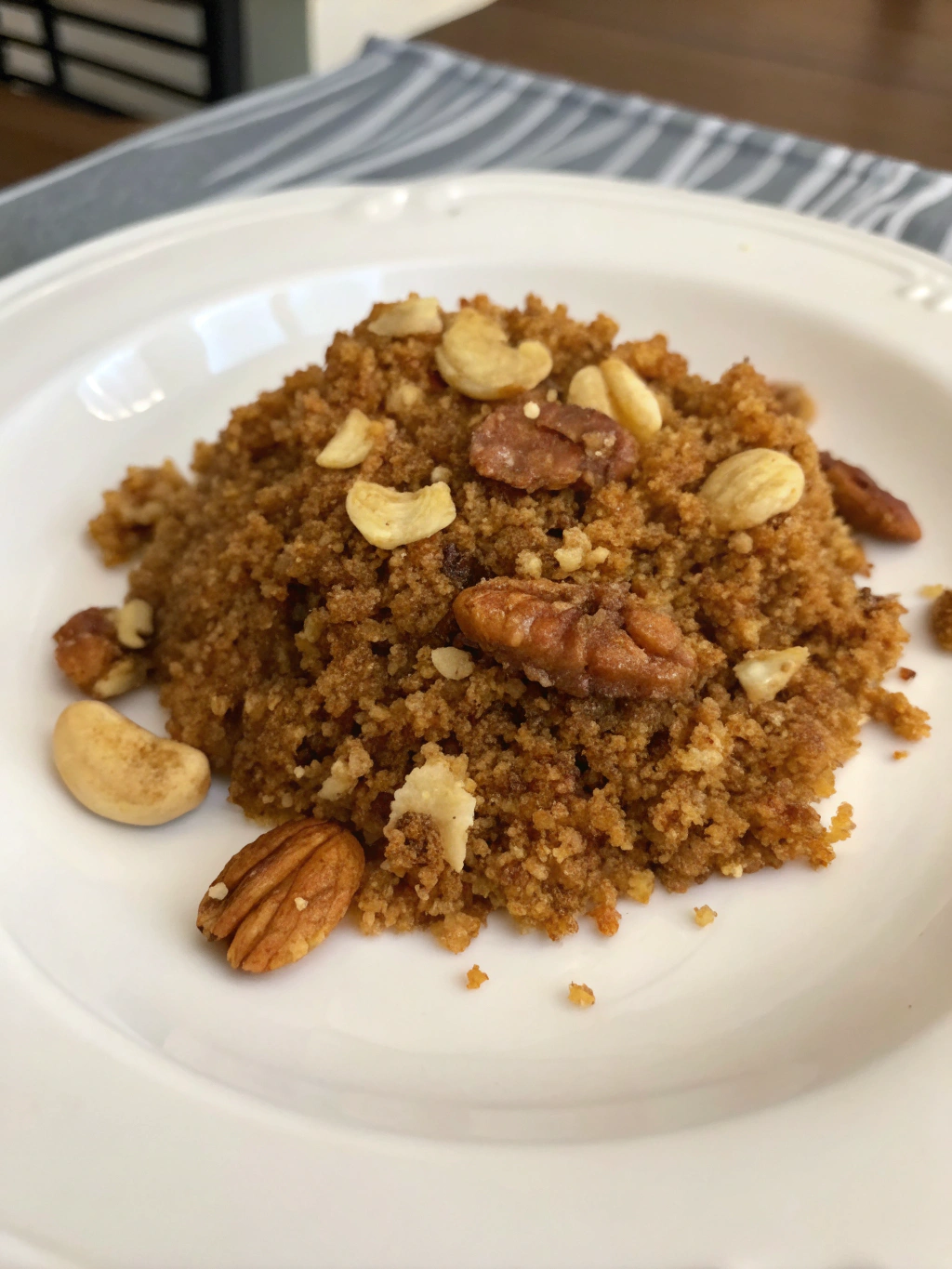
Using your hands (traditional method) or a spatula, blend all ingredients until the mixture has a moist, crumbly texture that holds together when pressed. The mixture should not be overly wet or dry it should maintain a cohesive form when squeezed.
Nutritional Information
- Calories per serving (¼ cup): 195
- Carbohydrates: 6g (4g net carbs)
- Fiber: 2g
- Protein: 6g
- Fat: 17g (primarily healthy monounsaturated fats)
- Glycemic Index: Low (under 10)
- Glycemic Load: 1 (compared to 18-20 in traditional sugar-based sellou)
Healthier Alternatives for the Recipe
For those with specific dietary requirements beyond diabetes, consider these modifications:
- Vegan version: Replace ghee with coconut oil or olive oil for a plant-based alternative that maintains the rich mouthfeel
- Nut allergies: Substitute sunflower seed flour for almond flour (1:1 ratio)
- Extra protein: Add 2 tablespoons of hemp seeds to boost protein content without affecting carbohydrate levels
- Lower fat option: Reduce ghee to ⅓ cup and increase cinnamon to 1 tablespoon to enhance flavor perception
Serving Suggestions
Serve this sugar-free sellou in small decorative bowls as part of your iftar spread. A traditional serving size is about 2-3 tablespoons, which provides sustained energy without blood sugar fluctuations. Pair with:
- Unsweetened Moroccan mint tea for an authentic experience
- A few fresh berries for added antioxidants and fiber
- Sprinkle extra crushed almonds and cinnamon on top for visual appeal
- Form into small balls for portion control and elegant presentation
Common Mistakes to Avoid
- Under-toasting ingredients: Proper toasting develops the essential nutty flavor profile; a recent study showed toasting increases antioxidant capacity by up to 60%
- Over-mixing: Working the mixture too much can release excess oils, creating an overly compact texture
- Using ground almonds instead of almond flour: The flour’s finer texture creates the authentic sellou consistency
- Adding sweeteners while ingredients are hot: This can cause uneven distribution and potential burning of sweeteners
- Using regular honey: Traditional honey has a glycemic index of 58, making it unsuitable for diabetics, unlike our suggested alternatives
Storing Tips for the Recipe
Sugar-free sellou can be stored for up to 3 months when properly prepared and stored:
- Cool completely before transferring to an airtight container
- Add a silica gel packet to maintain freshness and prevent moisture absorption
- Store in a cool, dark place (not the refrigerator, which can introduce moisture)
- Layer parchment paper between portions if stacking to prevent sticking
- Freeze for up to 6 months in sealed containers for longer preservation
Recommended Product For recipe

Electric Grain Mill Grinder for Sellou (Sfouf / Zmita) 650W High Speed
Prepare authentic Moroccan Sellou (Sfouf / Zmita) easily with this 650W electric grain mill grinder. Perfect for wheat, sesame, spices, and herbs. Check the best AliExpress price now!

Conclusion
This sugar-free sellou transforms a beloved Moroccan tradition into a diabetic-friendly delight that doesn’t compromise on flavor or cultural significance. By substituting refined sugars with natural alternatives and leveraging the natural richness of almonds and healthy fats, this recipe provides sustained energy perfect for breaking fast during Ramadan. The balance of complex carbohydrates, protein, and fats creates a blood-sugar-friendly treat that honors tradition while embracing modern nutritional needs. Try making this sugar-free sellou for your next gathering and experience how traditional flavors can harmonize perfectly with health-conscious adaptations.
FAQs
Can I use regular flour instead of almond flour?
No, regular flour would significantly increase the carbohydrate content and glycemic load. Almond flour is essential for both the authentic flavor and the low-carb profile needed for diabetics.
How can I tell if my sellou has gone rancid?
Any bitter smell or taste indicates that the oils in the nuts have oxidized. Always store in airtight containers and perform a smell test before consuming.
Is this recipe suitable for gestational diabetes?
Yes, the low glycemic impact makes it appropriate for gestational diabetes when consumed in recommended portions.
Can I reduce the fat content further?
While fat can be reduced, it’s not recommended as it helps slow carbohydrate absorption and provides the satiety essential during fasting periods.
Why is flaxseed included in this recipe?
Flaxseed adds fiber and omega-3 fatty acids that help regulate blood sugar levels, making it an excellent addition for diabetic-friendly recipes.
Did you try our recipe ?
There are no reviews yet. Be the first one to write one.